
Highway crashes do not always happen during predictable rush hour congestion or in the middle of heavy commuter traffic. In North Carolina, a collision may occur late at night, during an off-peak afternoon, or on a relatively open stretch of interstate where traffic conditions initially appear straightforward. Claims arising from these crashes can still become […]
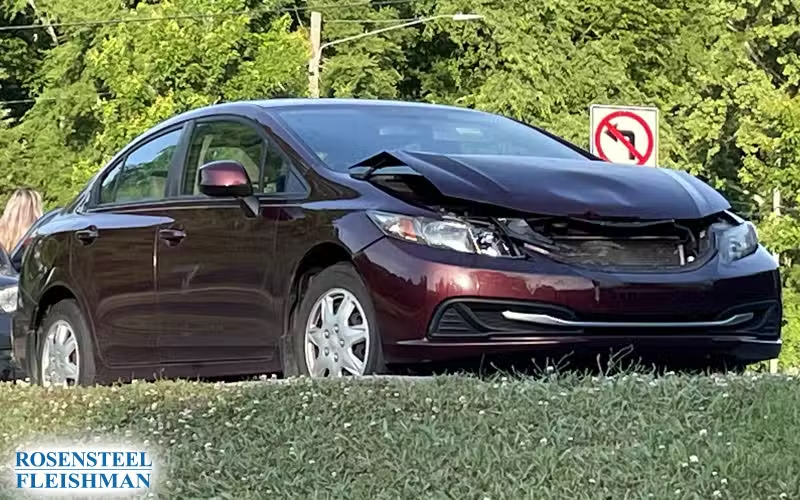

A car-crash claim does not have a fixed price based on the accident label, diagnosis, lawyer, or online calculator. Evaluation changes as evidence develops and should distinguish supported amounts from assumptions and unresolved questions.
No lawyer can responsibly promise a recovery amount; a defensible evaluation is a documented range built from responsibility, medical proof, losses, coverage, defenses, costs, and uncertainty.
Start with responsibility and defenses
- The collision sequence and conduct attributed to each participant
- Traffic controls, video, witnesses, vehicle evidence, electronic data, and reports
- Supporting and contrary evidence for legal responsibility and causal connection
- Contributory conduct, mitigation, service, venue, and other material defenses
Develop the medical causation record
Organize pre-event condition and function, symptom onset, diagnoses, testing, treatment, restrictions, response, gaps, later events, current status, prognosis, and properly supported future care. A diagnosis alone does not establish which event caused it or its financial effect.
Reconcile past medical expenses
North Carolina Rule of Evidence 414 addresses evidence offered to prove past medical expenses. Maintain itemized charges, payments, adjustments, denials, balances, payer identity, and amounts necessary to satisfy the bills.
Document work and daily function
- Job duties, schedule, pay method, attendance, restrictions, leave, accommodation, and return attempts
- Wage, tax, payroll, business, and benefits records appropriate to the claimed loss
- Mobility, sleep, household work, caregiving, recreation, and other concrete changes over time
- Assistance required, activity duration and frequency, and comparison with the pre-event baseline
Include property and out-of-pocket losses
Track repair or actual cash value, towing, storage, rental, personal property, deductibles, prescriptions, equipment, travel, and other event-related expenses. Separate amounts already paid from unpaid or disputed amounts.
Map the available recovery sources
- Liability, first-party, uninsured or underinsured, umbrella, employer, commercial, or self-insured sources
- Applicable limits, exclusions, reservations, denials, other claimants, and prior payments
- The practical ability to recover from a responsible person or entity beyond insurance
- Health, medical-payments, disability, or workers-compensation payments and possible repayment rights
Separate gross value from net recovery
The claimant’s net amount can be affected by fees, expenses, medical balances, liens, reimbursement, deductibles, allocations, and other obligations. Prepare a written distribution estimate rather than evaluating only the headline number.
Account for litigation variables without predicting them
Witness credibility, evidentiary rulings, qualified opinion, venue, judicial decisions, juror findings, expense, delay, collectability, and appeal can affect a filed case. State what is known, what remains disputed, and which assumptions produce the low and high ends of a range.
Use official consumer guidance carefully
The North Carolina Department of Insurance identifies categories that bodily-injury claims can include and explains that state statutes do not supply a pain-and-suffering calculation formula. That absence does not make valuation arbitrary; it makes documented evidence and reasoned comparison important.
Protect the deadline while value develops
G.S. 1-52 lists three-year periods for several actions and specified accrual language. Other periods may apply. Medical development and negotiation should not be assumed to extend the applicable filing deadline.
The related settlement-readiness guide explains demand support, offer terms, releases, repayment interests, and net distribution.
Rosensteel Fleishman Car Accident & Injury Lawyers provides information about evaluating Charlotte car accident claims without outcome promises.
Sources
Additional Car Accidents Articles
Left Turn Gap Judgment Errors When Visibility or Road Design Plays a Role
What happens when a driver begins a left turn and another vehicle suddenly changes lanes? The available opening can disappear almost instantly. In Charlotte traffic, this type of conflict may occur near multilane intersections where drivers must monitor oncoming vehicles, traffic signals, pedestrians, and vehicles moving between lanes at the same time. These crashes can […]
Multi Policy Insurance Considerations When One Policy Does Not Cover Every Loss
Insurance coverage after a serious car accident is not always limited to one policy. A collision may involve liability coverage, underinsured motorist coverage, medical payments coverage, an employer’s commercial policy, or another source of compensation. Identifying each applicable policy can affect how losses are documented, how negotiations develop, and whether a proposed resolution fairly reflects […]
What Happens When Vehicle Damage Appears Later Despite an Initial Inspection
Damage found days or weeks after a collision can complicate an insurance claim, especially when the cause of the crash or responsibility for the repairs remains disputed. A vehicle may look drivable during an initial roadside review in Charlotte, yet later show suspension problems, electrical faults, alignment issues, or damage hidden beneath exterior panels. When […]




