
Dealing with an unexpected injury at Lake Norman can be a challenging experience. This popular destination near Charlotte offers a range of activities, from boating and jet skiing to leisurely strolls along its scenic trails. However, accidents can happen in an instant, turning a fun outing into a stressful ordeal. From boating accidents to slips […]
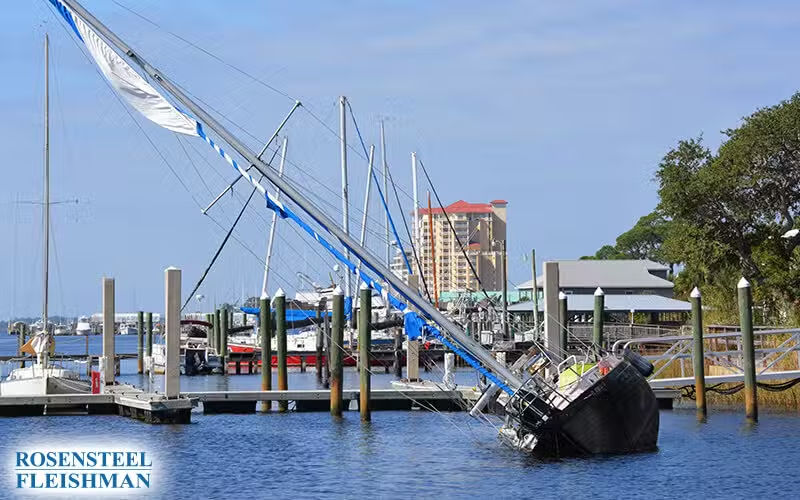

A boating incident record can preserve information, but it does not establish fault, coverage, injury causation, or a claim outcome.
Prioritize safety and emergency response
Medical needs, distress calls, and directions from law enforcement or emergency personnel come first. When it is safe to make a note, preserve what was personally observed and do not replace unknown details with a conclusion.
Record vessel and occurrence details
- Date, time, waterway, location, vessel identification, operator and owner information made available, and the source of each item
- Weather, visibility, direction of travel, vessel position, visible damage, flotation devices, photographs, video, and available witness information
- Report number, agency, towing or storage information, and any record that was unavailable or changed after the event
- Firsthand observations separated from another person’s statement, estimate, or reconstruction
Use the current North Carolina reporting rule
North Carolina’s Boating Safety Act addresses duties and reporting requirements for certain vessel occurrences. Whether a report is required and what information applies depends on the event, injury, damage, vessel, timing, and other facts.
Questions following a boating incident may be considered in a North Carolina personal-injury claim, which requires a fact-specific review.
Source
Additional Boating Accidents Articles
How to Request a North Carolina Boating Accident Report
A boating accident report can identify what an agency recorded, but it does not establish fault, coverage, injury causation, or a claim outcome. Identify the report request Use the agency’s current request process The N.C. Wildlife Resources Commission’s Request an Accident Report page provides the current request channel for its accident reports. An agency may […]
Mapping Responsibility After a North Carolina Personal-Watercraft Collision
A personal-watercraft collision can involve the operator’s conduct, vessel ownership, permission, rental terms, required equipment, waterway conditions, another vessel, a passenger, maintenance, and insurance. Treat these as separate evidence tracks rather than assuming that one operator, owner, or rental business controls every issue. Start with immediate safety and medical needs. When you are able, keep […]
Reporting and Documenting a North Carolina Boating Accident
A collision, fall overboard, wake event, grounding, fire, equipment failure, or personal-watercraft incident can create several records at once. Preserve the emergency response, required Commission report, agency investigation, vessel and equipment condition, witness accounts, medical record, and insurance communications as separate sources. A boating-accident file should separate emergency duties, the Commission report, the investigation record, […]




