
Work disruptions after a bicycle injury can involve more than missed paychecks. Separating employment support expenses, lost income, and future earning concerns helps make the financial picture clearer.
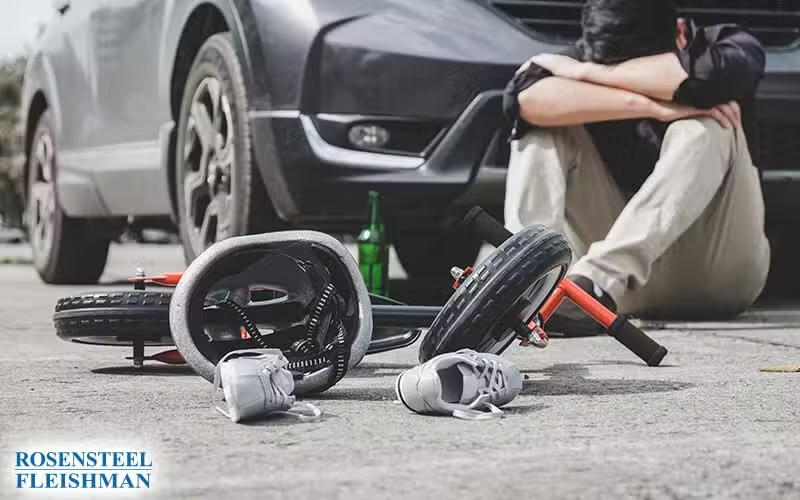

The physical setting of a bicycle collision may change through traffic, weather, construction, cleanup, signal work, vegetation, parked vehicles, or repairs. A useful location record captures what was observed, when it was observed, and how each file or measurement was created. It should not recreate missing facts or assign fault before the evidence is reviewed.
A bicycle-crash location record should preserve the rider’s route, exact collision point, roadway features, traffic controls, sight lines, lighting, surface conditions, nearby cameras, and later changes without turning observations into a fault conclusion.
Define the location more precisely than a street name
- Street, intersection, driveway, alley, parking-lot access, trail crossing, bridge, underpass, block face, or other precise segment
- Rider and vehicle approach directions, travel lane, bicycle lane, shoulder, path, sidewalk, crossing, turn path, and reported point of contact
- Nearest address, landmark, business, utility pole, signal cabinet, crosswalk, stop line, lane marking, sign, curb, median, or fixed reference
- Date, time, time zone, lighting, weather, surface condition, traffic volume observation, and any source used for a fact not personally observed
Photograph the approach, conflict area, and departure path
- Wide views from each relevant approach before moving to detail images
- Rider-height views where safe, plus views showing signs, signals, markings, parked vehicles, vegetation, construction, grade, curve, and possible sight obstructions
- Close views of debris, scrape, gouge, tire mark, fluid, damaged object, surface defect, or detached part with a fixed reference when appropriate
- No photograph taken from an active travel lane or unsafe position; safety and emergency response take priority over documentation
Preserve originals and identify how each file was made
North Carolina Rule of Evidence 901 addresses authentication or identification and gives illustrations involving witness knowledge, distinctive characteristics, public records, and processes or systems. Preserve the original photo, video, map export, ride file, screenshot, or measurement together with its creator, device or source, date, file name, storage location, and any later edit.
- Copy original phone, camera, bicycle-computer, navigation, and ride-tracking files without changing the only version
- Keep exported and native formats when available and record the export date and account or device used
- Label an annotated image as an annotation and retain the unchanged original beside it
- Record missing metadata, clock differences, compression, upload, download, crop, or conversion rather than hiding the change
Compare the location record with the crash report
The current NCDMV DMV-349 Instructional Manual explains location, roadway, non-motorist, diagram, narrative, and contributing-circumstance fields used in North Carolina crash reports. Compare the report with photographs, video, witness accounts, bicycle condition, vehicle condition, and measurements, but keep each source distinct. A code, diagram, or narrative is not a substitute for every underlying record.
Identify possible video sources promptly
- Business, residence, doorbell, parking, transit, school, public-building, worksite, vehicle, rider, and traffic-system camera identified by location and apparent field of view
- Owner or custodian, contact method, request date, requested time window, response, retention statement, and produced file
- Clock shown in the video compared with a known reference without silently changing its timestamp
- A request does not guarantee that a recording exists, was retained, covers the event, or can be obtained
Record later changes as later changes
- New sign, marking, signal timing, barrier, resurfacing, repair, cleanup, vegetation work, lighting change, or construction photographed with date and source
- Before-and-after comparison aligned to the same viewpoint when possible
- Public project record, work order, permit, maintenance entry, or news report kept separate from a personal observation
- Later condition not assumed to prove the earlier condition, negligence, causation, or admissibility
Add the location record to the larger review file
The related guide to preparing a bicycle-crash case-review packet explains how location material fits with identity, collision, bicycle, medical, insurance, loss, and communication records.
Rosensteel Fleishman Car Accident & Injury Lawyers provides general information about consulting a Charlotte bicycle-accident lawyer when location evidence may change. Responsibility, defenses, causation, damages, insurance, evidence rules, and deadlines depend on the complete facts and current law.
Sources
Additional Bicycle Accidents Articles
How Insurers Evaluate Extra Work Breaks During Bicycle Injury Recovery
Extra breaks can change a workday without changing a paycheck. Clear records help distinguish interrupted tasks, unpaid time, and questions about responsibility for a bicycle accident.
Charlotte Street Lighting and Light Sensitivity After a Bicycle Injury
Street lighting at a crash scene and light sensitivity afterward raise different documentation questions. Clear records can help explain what happened, what changed, and what still needs legal review.
Using Bicycle Injury Recovery Reviews to Identify Lasting Limitations
Bicycle injury progress reviews can document continuing difficulties without proving that a limitation is permanent. Learn what to record and how to address conflicting accounts.


